
The Orthodox Church: between political equation and council
The analysis of Nicolas Kazarian, associate researcher at IRIS.
Orthodoxy, as an identity symbol of a minority community, became the foundation of nationalism Modern to number of countries in the Balkans, combined with separatist projects that restructures the Southeast European political map.
The Orthodox Church is a geopolitical reality in itself which powerfully influences the preparation of the Holy and Great Council. The latter should meet in June 2016.
Download the Iris’ note (in french)
Nicolas Kazarian is associate researcher at IRIS, in charge of religious geopolitics Observatory. Historian and specialist of the Orthodox world, he is the author of notes and articles on the relationship between politics and religion in different national contexts of the Orthodox Church. In recent years, he invested the field of geopolitics research by studying religious issues in terms of international relations.
Related Articles
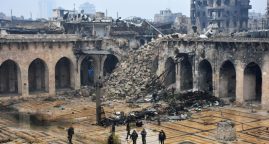
“ICOMOS Guidance on Post Trauma Recovery and Reconstruction for World Heritage Cultural Properties”
03/23/2017. Engage together to preserve and pass on the heritage to future generations.
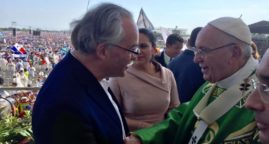
World Youth Day: Grand Hospitaller Greets Pope Francis in Panama
01/31/2019. Positive track record for the Order of Malta’s 130 first-aid volunteers.
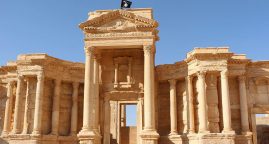
G7 culture ministers discuss threat of cultural trafficking
03/30/2017. The discussion is turning not just to the destruction of cultural treasures, as seen in Syria and Afghanistan, but also to their trafficking as a source of funding to support the activities of extremist groups
