


Migrants significantly contribute to economic growth
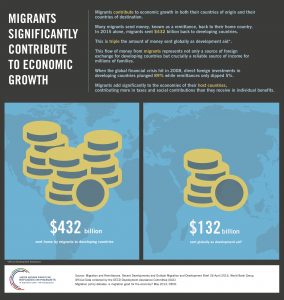
Migrants contribute to economis growth in both their countries of origin and their countries of destination.
Many migrants send money, known as remittance, back to their home country. In 2015 alone, migrants sent $432 billion back to developing countries.
This is triple the amount of money sent globally as development aid.
This flow of money from megrants represents not only a source of foreign exchange for developing countries but crucially a reliable source of income for millions of families.
When the global financial crisis hit in 2008, direct foreign investments in developing countries plunged 89% while remittances only dipped 5%. Migrant adds significantly to the economics of their host countries, contributing more in taxes and social contributions than they receive in individual benefits.
Related Articles

Iraq: Mosul offensive threatens devastating humanitarian consequences
18/10/2016. International organizations fear more than one million people could be affected

IOM DG Swing’s Statement at the Syria Brussels Conference
04/05/2017. “The future of Syria will be grim if current needs are not being addressed with a greater sense of urgency.”
Three notable innovations in humanitarian aid in 2016
12/26/2016. Marked by the first World Humanitarian Summit in May in Istanbul, 2016 was supposed to be the year to #ReShapeAid.
