

Countries in crisis: rethinking the role of development aid
On the occasion of the 3rd National Conference Humanitarian which had met on 23 February in Paris, Anne Paugam, CEO of the French Development Agency, invites us to consider development aid as an investment.
The strategy and procedures of multilateral and bilateral organizations must be revised accordingly.
The reality is there: the crisis of land multiply and transform themselves. The effects of climate change, the Ebola epidemic, recurrent security tensions in the Sahel or Central and Syrian dramas show: the crisis can no longer be considered an exception.
Nearly 2.6 billion people were affected by natural disasters over the past decade and more than 1.5 billion people live in countries affected by violent conflict.
“The costs of the crisis are exorbitant, beyond the human tragedy, the associated economic costs natural disasters of the decade 2005-2015 are estimated at 1300 billion, while the home of people displaced by crises in host regions generates increasing pressure on public services, the environment or local social fabric.”
Given this situation, multilateral and bilateral organizations adapt their strategy and acquire important means of fast action and prevention …
Read the full article (in french) on “La Croix” website
Related Articles
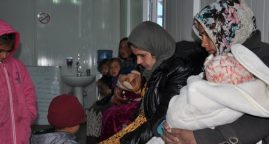
Syria: Describing the toll of war on health in absentia
04/03/2017. In our line of work, we rely on numbers. The numbers guide us to where the needs are. They tell us what is making people sick. They indicate how difficult it is for some to access healthcare.
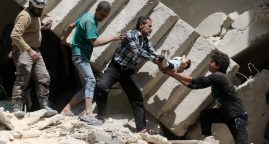
Children bear ‘disproportionate lethal impact’ of Syrian war, warns study
According to estimates, one in four civilians killed in 2016 was under the age of 18.
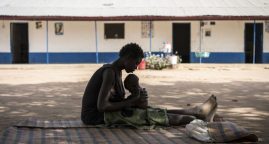
Hunger in Africa : our File
March 2017. Nearly 20 million people are threatened by the violent famine in Yemen, Somalia, Nigeria and South Sudan. Here is a collection of articles that will give you a non-exhaustive overview.
